






What is an RTG crane?
Most professionals in port logistics, container yards, and heavy loading and unloading are familiar with RTG cranes. Only by understanding its definition and value can beginners and overseas project purchasers make good selections and improve operational efficiency.
This article will analyze the basic definition, core characteristics, application scenarios, and advantages of RTG cranes.
RTG Crane: Basic Definition
RTG is the abbreviation for Rubber Tyred Gantry Crane, also commonly known as Tire Crane or Container RTG Crane. It is a highly mobile heavy-duty gantry crane equipment.
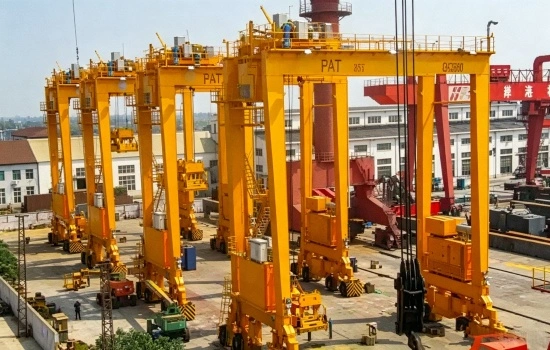
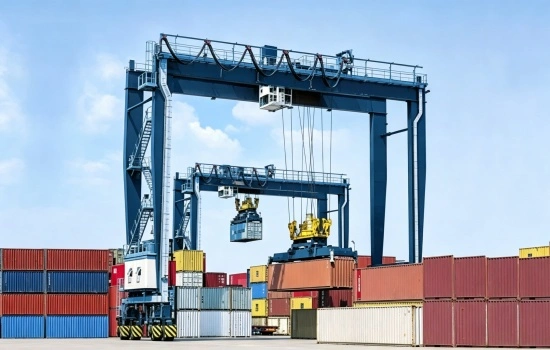
The RTG crane consists of a sturdy steel gantry, a lifting trolley equipped with specialized container lifting equipment, a stable power system, and a tire type walking mechanism. It is suitable for major container terminals, inland yards, railway freight hubs, and logistics parks.
Core characteristics of RTG crane
The RTG crane is designed specifically for heavy and large-scale container loading and unloading operations, with an overall structure that fully meets the actual operational needs of ports and yards. The core highlights of the RTG crane are mainly reflected in these aspects:
High mobility and operational flexibility: With the help of rubber tires, it can move freely throughout the yard, switch lanes flexibly, or transfer operations between different storage areas. Most models support 90 degree steering, making it very convenient to work in small spaces.
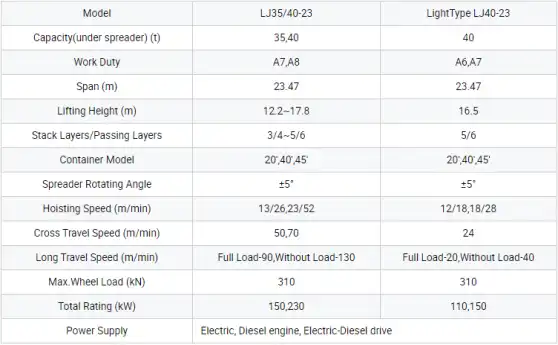
Strong lifting capacity and high stacking efficiency: The rated lifting capacity of conventional standard RTG cranes is between 40 tons and 65 tons, and they can stack up to 6-7 layers of containers, greatly increasing the storage density of the yard and maximizing the use of site space.
The body is sturdy and suitable for various working conditions: The body is made of high-strength steel, which can easily cope with harsh outdoor environments such as coastal salt spray and extreme temperature differences. The equipment has a long service life and low failure rate, and can meet the continuous operation of ports.
Stable operation, safe and efficient:Equipped with advanced PLC control system, anti sway technology and humanized operation cab, it achieves precise and smooth lifting and positioning of goods, comprehensively improving the overall efficiency of loading and unloading operations.
Application scenarios of RTG crane
Port and container terminal operations: This is the core application scenario of RTG cranes, mainly responsible for loading and unloading import and export containers, container trailer loading and unloading operations, regulating the storage order of the yard, and assisting in the loading and unloading process of ships and goods.
Inland container yards and dry ports: For inland logistics hubs without fixed rail facilities, RTG cranes can achieve flexible container loading and unloading and warehousing management without requiring large infrastructure investment, with high cost-effectiveness.
Railway freight station: Complete container transfer operations between freight cars and trains, and connect multimodal transportation links.
The core difference between RTG crane and RMG crane
The core difference between RTG crane and RMG gantry crane lies in their mobility: RTG crane adopts a tire type design, which allows for full range free movement; The RMG crane relies on fixed steel rails to travel, and its operating range is limited.
RTG cranes do not require pre installation of steel rails, have lower infrastructure investment, and can adapt to temporary sites and dynamically adjust yard layouts. They are the preferred choice for small and medium-sized ports, inland yards, and buyers pursuing high cost-effectiveness and flexible operation solutions; RMG cranes are more suitable for scenarios such as large fixed docks and large-scale stacking operations.
| Item | RTG Crane (Rubber-Tired Gantry Crane) | RMG Crane (Rail-Mounted Gantry Crane) |
| Core Difference | Rubber-tired design, flexible full-area movement | Rail-mounted, fixed operation range |
| Mobility | Free to move without rails | Limited to fixed track route |
| Infrastructure Cost | Lower, no need for rail construction | Higher, requires track laying |
| Suitable Scenarios | Small & medium ports, inland yards, temporary sites | Large fixed terminals, high-volume stacking |
| Key Advantages | Flexible layout, cost-effective | Stable, ideal for heavy-duty operations |
Why choose RTG crane?
For importers, logistics companies, and port operators worldwide, the comprehensive value of RTG cranes is highly in line with practical operational needs, and the core advantages are clear at a glance:
Lower upfront infrastructure costs: No need to lay fixed steel rails, significantly reducing site construction costs and construction cycles, suitable for overseas urgent landing engineering projects.
Strong site adaptability: It can operate smoothly in hardened yards, uneven ground, and temporary work areas, perfectly adapting to emerging markets and flexible logistics operation layouts.
Efficient and considerable homework efficiency: Fast loading and unloading cycle speed, high stacking density, convenient mobile operation, effectively reducing waiting time for goods, improving daily cargo throughput, and directly helping enterprises achieve profit growth.
Excellent global adaptability: Standardized design, low maintenance difficulty, easy procurement of accessories, adaptable to the operating and maintenance conditions of the vast majority of countries, ensuring long-term stable operation of cross-border business.
Conclusion
The RTG tire type container gantry crane combines maneuverability, load-bearing capacity, and versatility. Whether upgrading port terminals, building inland yards, or purchasing reliable heavy-duty loading and unloading equipment for overseas markets, selecting high-quality RTG crane products can efficiently improve operational efficiency, compress operating costs, and ensure smooth project operation.
If you need to customize RTG cranes, our team can provide professional solutions, technical support, and comprehensive after-sales service for global customers.



