






What is a semi gantry crane?
When selecting lifting equipment for workshops, warehouses, or outdoor processing sites, if you want flexible, space saving, and cost-effective equipment, you need to solve the problem of gantry cranes to some extent. But many people cannot distinguish the difference between it and ordinary gantry cranes and overhead cranes, nor are they sure if it is suitable for their own workshop operation scenarios.
This article explains its core information in plain language, helping beginners in procurement and venue planning quickly determine suitability.
What is the definition of a semi gantry crane?
Semi gantry crane,simply put, is a combination of "half bridge+half gantry" lifting equipment, belonging to the sub category of gantry crane, and is also a highly adaptable light and medium-sized lifting solution on the market.
The biggest difference between it and the full gantry crane lies in the supporting structure: the full gantry crane has independent legs on both sides and relies entirely on ground rails to support its movement; The semi gantry crane, on the other hand, only has one side with a landing leg and runs on the ground track, while the other side is directly attached to the existing load-bearing beams, columns, or running tracks of the bridge crane in the factory building, without the need to build a complete set of supporting structures. It belongs to the "force based" lifting design.
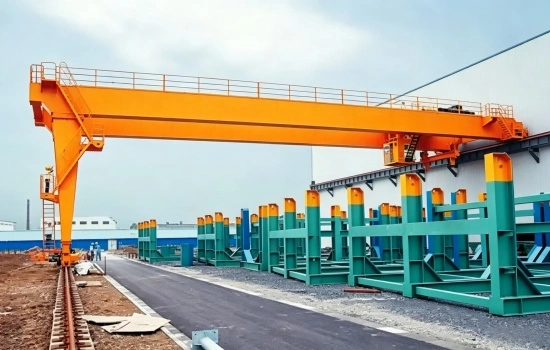
Structural characteristics of semi gantry crane
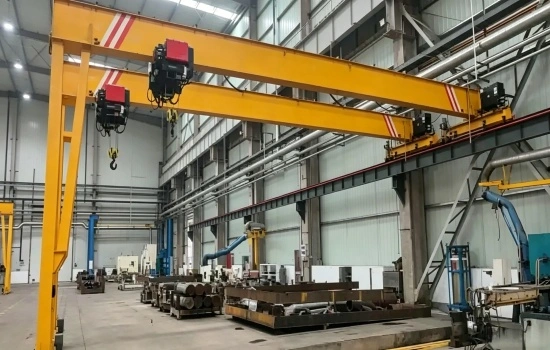
1. Single side ground support: Only one side is equipped with steel support legs, which can walk along the pre embedded track on the ground, occupying less ground space and not affecting operations in other areas of the workshop.
2. Single side hanging load-bearing: The other side is directly connected to existing factory beams, columns, or supporting tracks, without the need to rebuild the top load-bearing structure, saving installation costs and construction time.
3. Flexible and adjustable size: The span, lifting height, and lifting weight can be customized according to needs, and can be adapted to narrow workshops, semi open spaces, warehouse corners, and other areas.
4. Overall lightweighting: Compared to full gantry cranes, it requires less steel, has a more compact body, runs more smoothly, and has lower load-bearing requirements for the ground and factory buildings.
What scenarios are suitable for semi gantry cranes?
1. Workpiece lifting and machine tool loading and unloading in small and medium-sized machining workshops and mold workshops;
2. Cargo loading, unloading, and stacking operations in warehouses and logistics stations;
3. Daily material transportation in semi outdoor processing plants, building materials factories, and hardware factories;
4. The renovation of old factory buildings and the narrow space of the site do not want to disrupt the lifting needs of the original factory structure;
5. Cooperate with production lines and assembly lines to carry out fixed-point reciprocating lifting operations.
The core advantages of semi gantry cranes
1. Lower cost and super high cost-effectiveness: No need to build a complete supporting structure, steel usage and installation construction costs are much lower than those of a full gantry crane, and later operation and maintenance costs are also more cost-effective, suitable for customers with limited budgets;
2. Space saving and no space occupation: The single-sided support leg design greatly saves ground floor space, and other operations can be carried out simultaneously in the workshop without wasting limited production space;
3. Easy installation and short construction period: relying on the existing factory structure for installation, the construction process is simple, and there is no need for large-scale site renovation. Installation and commissioning can be completed in a short period of time, and it can be quickly put into use;
4. Flexible operation and strong applicability: It can achieve three-dimensional lifting of front and back, left and right, and up and down, with smooth operation and simple operation. Novices can get started with simple training and adapt to various light and medium-sized lifting needs.
A small reminder before selection and use
1.Before selecting, it is necessary to confirm the load-bearing capacity of the existing factory's beams and columns, as well as the space available for laying tracks on the ground. The span, lifting height, and rated load should be measured in advance;
2. Regular inspections should be carried out during daily use, with a focus on checking the track, support legs, wire ropes, and electrical control system. Proper lubrication and maintenance can effectively extend the service life of the equipment and reduce the failure rate;
3. The semi gantry crane is mainly used for lifting light and medium loads, heavy goods, and super large tonnage. It is recommended to choose a full gantry crane or a professional bridge crane.
Summary
Semi gantry crane is a flexible, space saving, and low-cost universal lifting equipment that perfectly adapts to the daily lifting needs of most small and medium-sized sites. It not only solves the limitations of fixed cranes, but also avoids the space and cost waste of full gantry cranes. If your venue space is limited, your budget is moderate, and you have regular light and medium-sized lifting needs, a semi gantry crane is a very suitable solution.



